
We are called to live in humility, repentance, and mercy, to struggle against haughtiness and arrogance within ourselves
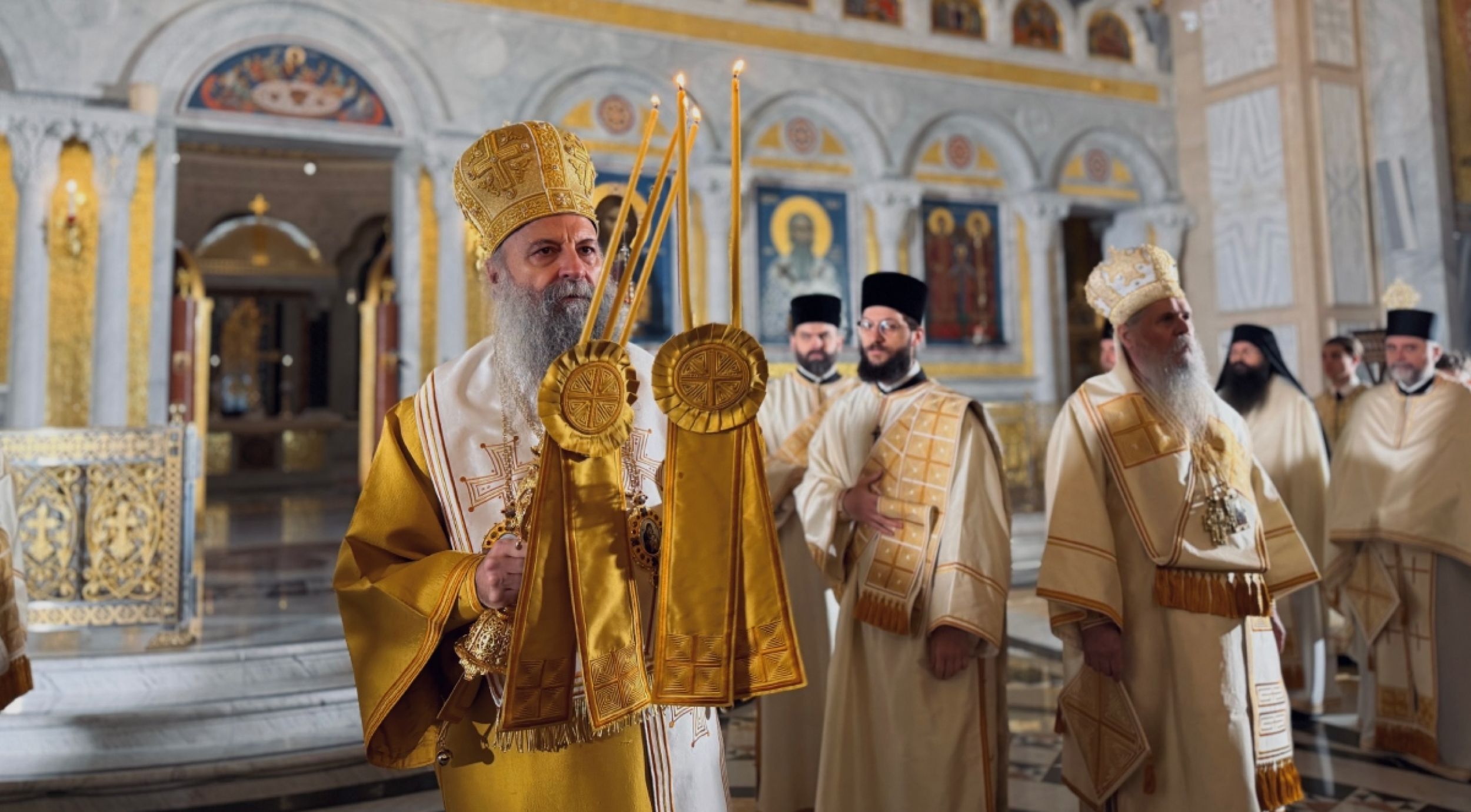
Homily of His Holiness Serbian Patriarch kyr Porfirije, delivered on 8 February 2026, at the Holy Liturgy in the Church of Saint Sava on Vračar.
Brothers and sisters, we have heard the Parable of the Prodigal Son (Lk 15:11–32), and that same parable we also call the Parable of the Merciful Father, depending on the perspective from which we observe the content, the aim, and the message of this moving Gospel story, which belongs among the finest and most beautiful literary works in all of human literature.
He was dead and is alive again; he was lost and is found (Lk 15:24) are the words with which this parable concludes, and perhaps it would be sufficient simply to focus our attention on those words, for from them we may conclude that a man can be dead even when he is biologically alive, when he breathes with his bodily lungs, but when with his mind and his heart he is separated from the source of life, when, in a word, he is separated from God. Regardless of the fact that he is biologically alive, every man is in fact dead or, as it is written in the Holy Gospel, is a whitewashed tomb (Mt 23:27). When is a man separated from God? When he rebels against Him; when he does not understand that all that he is and all that he has, as well as all creation and the whole world, is a gift of God, is God’s creation; that is, when we think that what we are and what we have depends on us, that it is ours, that we have created it or, even if we have received it, that we have deserved it by our own effort.
The greatest snare is the inner spiritual snare, the snare encountered on the plane of thoughts or on the battlefield of our spiritual struggle within our heart when we possess abilities, gifts, and talents and, by means of them, succeed in achieving some result, yet forget that God has given us the talents, but also the conditions and circumstances so that the talents and gifts we have used in given circumstances may bear fruit. If we forget all this and think that we are skillful, that we are intelligent, that we are capable, that nothing and no one can stand against us and that we succeed in every situation in finding a path and reaching the desired goal — we forget, therefore, the source. Sometimes, even though we know where the source is and where our support lies, we consciously renounce it. Then, brothers and sisters, it may be that we are successful, that many things go well for us, but arrogance, vanity, and pride make us, regardless of all that, as it is written in the Holy Gospel, whitewashed tombs, that is, although we are biologically alive, we are in fact dead.
In this Gospel story we have three persons: the father and two sons. One, the elder son, is someone who is continually obedient to his father, lives in accordance with his father’s will, does everything his father asks of him. We also have the younger son who rebels against his father, wants his own way, wants to begin an independent life far from his father’s house. Of course, both one and the other model of life are known to us. As a matter of fact, we often recognize within ourselves now one, now the other son. Sometimes we are obedient to our parents; sometimes we would like to have things our own way. If we understand this parable in a spiritual sense, in the father we recognize God, and in the two sons we see two different models of our human behavior; we see that in relation to God we are sometimes the elder son and sometimes the younger son.
This parable, like every other Gospel parable, does not aim only to emphasize what is negative and bad, but above all to underline and highlight what is good. Thus, in the case of the elder son, what is good is that he listens to his father; we would say that he behaves in accordance with his commandments, with God’s commandments, just as in the case of the younger son it is good that, at the end of his odyssey, he returned to his father’s house, that he discovered that repentance is the only right, normal, healthy way of our life.
In both the one and the other son there is something that reminds us of what we must avoid or what, when we recognize it within ourselves, we ought to correct. The younger son rebelled against his father. It is interesting that we never find in the Gospel, and indeed rarely even in the history of human literature, that someone rebels against his mother, that he rises up against his mother. The mother is the root; she is the soil; she is the origin, and to her we continually return, as, for example, in the story of Odysseus. He departed, had many peripeties throughout his life, and only when he matured, when he came to fullness, did he return to his homeland, he returned to his root. In the same way, the younger son in the Parable of the Merciful Father or of the Prodigal Son became estranged. Everything he received from his father he wanted to appropriate and attribute to himself. He lived an individualistic way of life, closed himself within himself, within his self-love, and we saw the epilogue of such a choice. He came to complete non-existence. Though alive, he was dead.
However, within him there remained that which remains in every man, however much he may become estranged from God and from himself. There always remains the fact that we are created in the image and likeness of God and that we can never extinguish within ourselves the nostalgia and the need for fullness, and that fullness is always found in God. And therefore, this son, only when he had touched bottom, was able to perceive what he was, what he had, and to weep bitterly, to rekindle and awaken within himself the need for beauty and for fullness that existed within him and had not been erased. At that moment he was resurrected; he came to life. At that moment, although still physically far from his father, he experienced the joy of his father’s house. In repentance he returns to his father, fulfilling that to which the Lord calls: Repent, for the Kingdom of Heaven is at hand (Mt 4:17).
The elder son, although he shows readiness to live in accordance with his father’s will or, we would say, in accordance with God’s commandments, he too, like that Pharisee from the parable we read last week, considers himself good because he fulfills God’s will and believes that he ought to be rewarded. He too forgets that he is in his father’s house and that all that he has is from his father. Moreover, all that is the father’s is also his. And the father is crucified between the two sons. Both the one and the other possess beauty, goodness, and much that is positive within themselves, but both also have as a temptation egotism, self-love, and pride. The father shows condescension, love, and humility toward both. Therefore, even though each of us has the opportunity to recognize himself now in the one and now in the other son, he is called also to emulate the father from this parable which we have heard from the Gospel according to Luke. We are called to live in humility, in repentance, but at the same time to struggle against haughtiness and arrogance within ourselves. We are called to be merciful, to be always ready not only to embrace those who come to us and seek our embrace. We are called also to act like this father, who even went outside his own house to meet the runaway son and awaited him with an open soul and an outstretched heart.
May the Lord grant that, as we prepare for the forthcoming fast, we fulfill God’s commandments like the elder son, that we always remain in our Father’s house, that we know that the path of repentance is the only path of our growth and of our continual return to our source and to our root, that we have a merciful heart so that, having all this in humility and in joy, we may glorify our Savior, the Lord Jesus Christ, and His Father and the Holy Spirit, now and ever and unto the ages of ages. Amen.
Brothers and sisters, we have heard the Parable of the Prodigal Son (Lk 15:11–32), and that same parable we also call the Parable of the Merciful Father, depending on the perspective from which we observe the content, the aim, and the message of this moving Gospel story, which belongs among the finest and most beautiful literary works in all of human literature.
He was dead and is alive again; he was lost and is found (Lk 15:24) are the words with which this parable concludes, and perhaps it would be sufficient simply to focus our attention on those words, for from them we may conclude that a man can be dead even when he is biologically alive, when he breathes with his bodily lungs, but when with his mind and his heart he is separated from the source of life, when, in a word, he is separated from God. Regardless of the fact that he is biologically alive, every man is in fact dead or, as it is written in the Holy Gospel, is a whitewashed tomb (Mt 23:27). When is a man separated from God? When he rebels against Him; when he does not understand that all that he is and all that he has, as well as all creation and the whole world, is a gift of God, is God’s creation; that is, when we think that what we are and what we have depends on us, that it is ours, that we have created it or, even if we have received it, that we have deserved it by our own effort.
The greatest snare is the inner spiritual snare, the snare encountered on the plane of thoughts or on the battlefield of our spiritual struggle within our heart when we possess abilities, gifts, and talents and, by means of them, succeed in achieving some result, yet forget that God has given us the talents, but also the conditions and circumstances so that the talents and gifts we have used in given circumstances may bear fruit. If we forget all this and think that we are skillful, that we are intelligent, that we are capable, that nothing and no one can stand against us and that we succeed in every situation in finding a path and reaching the desired goal — we forget, therefore, the source. Sometimes, even though we know where the source is and where our support lies, we consciously renounce it. Then, brothers and sisters, it may be that we are successful, that many things go well for us, but arrogance, vanity, and pride make us, regardless of all that, as it is written in the Holy Gospel, whitewashed tombs, that is, although we are biologically alive, we are in fact dead.
In this Gospel story we have three persons: the father and two sons. One, the elder son, is someone who is continually obedient to his father, lives in accordance with his father’s will, does everything his father asks of him. We also have the younger son who rebels against his father, wants his own way, wants to begin an independent life far from his father’s house. Of course, both one and the other model of life are known to us. As a matter of fact, we often recognize within ourselves now one, now the other son. Sometimes we are obedient to our parents; sometimes we would like to have things our own way. If we understand this parable in a spiritual sense, in the father we recognize God, and in the two sons we see two different models of our human behavior; we see that in relation to God we are sometimes the elder son and sometimes the younger son.
This parable, like every other Gospel parable, does not aim only to emphasize what is negative and bad, but above all to underline and highlight what is good. Thus, in the case of the elder son, what is good is that he listens to his father; we would say that he behaves in accordance with his commandments, with God’s commandments, just as in the case of the younger son it is good that, at the end of his odyssey, he returned to his father’s house, that he discovered that repentance is the only right, normal, healthy way of our life.
In both the one and the other son there is something that reminds us of what we must avoid or what, when we recognize it within ourselves, we ought to correct. The younger son rebelled against his father. It is interesting that we never find in the Gospel, and indeed rarely even in the history of human literature, that someone rebels against his mother, that he rises up against his mother. The mother is the root; she is the soil; she is the origin, and to her we continually return, as, for example, in the story of Odysseus. He departed, had many peripeties throughout his life, and only when he matured, when he came to fullness, did he return to his homeland, he returned to his root. In the same way, the younger son in the Parable of the Merciful Father or of the Prodigal Son became estranged. Everything he received from his father he wanted to appropriate and attribute to himself. He lived an individualistic way of life, closed himself within himself, within his self-love, and we saw the epilogue of such a choice. He came to complete non-existence. Though alive, he was dead.
However, within him there remained that which remains in every man, however much he may become estranged from God and from himself. There always remains the fact that we are created in the image and likeness of God and that we can never extinguish within ourselves the nostalgia and the need for fullness, and that fullness is always found in God. And therefore, this son, only when he had touched bottom, was able to perceive what he was, what he had, and to weep bitterly, to rekindle and awaken within himself the need for beauty and for fullness that existed within him and had not been erased. At that moment he was resurrected; he came to life. At that moment, although still physically far from his father, he experienced the joy of his father’s house. In repentance he returns to his father, fulfilling that to which the Lord calls: Repent, for the Kingdom of Heaven is at hand (Mt 4:17).
The elder son, although he shows readiness to live in accordance with his father’s will or, we would say, in accordance with God’s commandments, he too, like that Pharisee from the parable we read last week, considers himself good because he fulfills God’s will and believes that he ought to be rewarded. He too forgets that he is in his father’s house and that all that he has is from his father. Moreover, all that is the father’s is also his. And the father is crucified between the two sons. Both the one and the other possess beauty, goodness, and much that is positive within themselves, but both also have as a temptation egotism, self-love, and pride. The father shows condescension, love, and humility toward both. Therefore, even though each of us has the opportunity to recognize himself now in the one and now in the other son, he is called also to emulate the father from this parable which we have heard from the Gospel according to Luke. We are called to live in humility, in repentance, but at the same time to struggle against haughtiness and arrogance within ourselves. We are called to be merciful, to be always ready not only to embrace those who come to us and seek our embrace. We are called also to act like this father, who even went outside his own house to meet the runaway son and awaited him with an open soul and an outstretched heart.
May the Lord grant that, as we prepare for the forthcoming fast, we fulfill God’s commandments like the elder son, that we always remain in our Father’s house, that we know that the path of repentance is the only path of our growth and of our continual return to our source and to our root, that we have a merciful heart so that, having all this in humility and in joy, we may glorify our Savior, the Lord Jesus Christ, and His Father and the Holy Spirit, now and ever and unto the ages of ages. Amen.
Најновије вести
20.03.2026 13:24